Research Project Summary
This study explores the feasibility, accessibility, potential improvement in patient mental well-being and function of integrating an arts prescribing program into a pain management practice. Chronic pain affects millions in the U.S. and is often associated with reduced mental well-being, social isolation, and diminished quality of life. This research investigates the barriers and facilitators in implementing the arts prescribing program into a pain management practice and whether referring patients to externally organized community-based arts programming can offer meaningful support for individuals experiencing chronic pain.
Research Project Goals
This study explores the feasibility, accessibility, potential improvement in patient mental well-being and function of integrating an arts prescribing program into a pain management practice. Chronic pain affects millions in the U.S. and is often associated with reduced mental well-being, social isolation, and diminished quality of life. This research investigates the barriers and facilitators in implementing the arts prescribing program into a pain management practice and whether referring patients to externally organized community-based arts programming can offer meaningful support for individuals experiencing chronic pain.
Research Project Objectives
1) Recruit 50 NMI patients over 18 months to participate in the study.
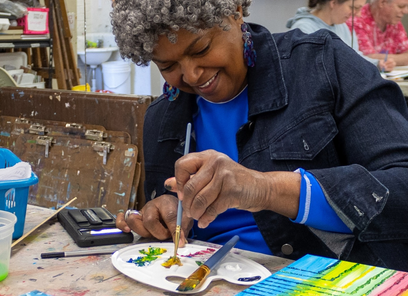
2) Enroll each volunteer in 8-12 weeks of regular participation in a weekly art class offered by a community organization in South Jersey, at no cost to the participant.
3) Administer evidence-based assessments and follow-up interviews to all participants and staff, collecting quantitative and qualitative data to assess feasibility, acceptability, accessibility, and impact.
4) Conduct a statistical analysis of data collected, assess results, and develop a sustainability plan to provide direction for future research.